Blog

Safari season slowly wakening

Safari season slowly wakening It has been relatively quiet the past few months in southern Africa. The rainy season is on now and Botswana received a good fall a few days ago. This time is a bit challenging for safari lovers as roads become waterlogged and animals are scattered far and wide in the lush vegetation. Only the impala creches remain fairly easy to spot in their familiar groups. No, visiting Botswana now is best left to those who love solitude and isolation. However, now is the right time to start planning a safari – already from April the first visitors start arriving as the weather changes over to the dry season. During this time the abundant wildlife, virtually invisible during the wet months, once again start congregating in splendid groups for us to admire with wonder! It’s wise to start planning your trip as early as possible – lodges and campsites fill up quickly, with some places booked a year in advance. I have seen what a nightmare it can be trying to make last-minute bookings for a safari, so don’t leave it too late and start getting your plans in order for a wonderful wildlife experience in beautiful Botswana.

Welcome to the inland delta

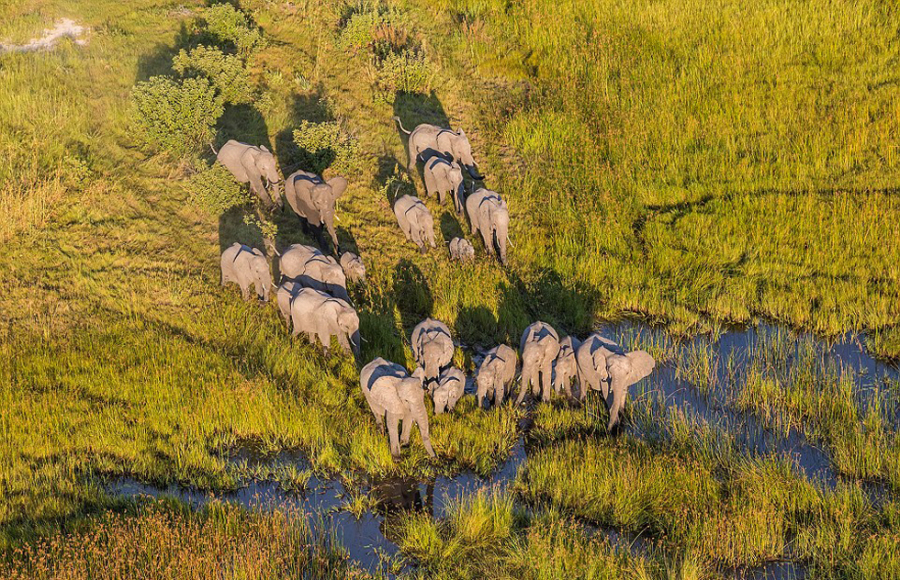
Welcome to the inland delta It’s my favourite country, a place where I lived and worked so long I have even been  called a ‘Motswana’ (inhabitant of Botswana) by the locals because of my fluent Setswana language and knowledge of the country and culture. You can put your trust in me to answer any queries about visiting and travelling to Botswana. My top tip for today: any visit to the country is incomplete unless you include the Okavango Delta. The only inland delta in the world, it provides a unique ecosystem – a wetland in a desert area – providing a lush habitat teeming with wildlife. Utterly incredible – you won’t believe your eyes!

Bienvenidos al delta interior

Bienvenidos al delta interior Es mi país favorito, un lugar donde viví y trabajé tanto que hasta me han llamado un ‘Motswana’ (habitante de Botswana) por los lugareños debido a mi habilidad en el idioma de Setswana y al conocimiento del país y la cultura. Puede confiar en mí para responder cualquier consulta sobre visitar y viajar a Botswana. Mi mejor consejo para hoy: cualquier visita al país está incompleta a menos que incluya el delta del Okavango. El único delta interior del mundo, proporciona un ecosistema único, un humedal en una zona desértica, que proporciona un exuberante hábitat lleno de vida silvestre. Totalmente increíble: ¡no creerás en tus ojos!

Why is a safari in Botswana so expensive?

Why is a safari in Botswana so expensive? This is a question I am asked all the time! We may consider an excursion to the cultural highlights of Europe quite a grand expedition, but still, most of us can afford to visit the Louvre in Paris or the Sagrada Familia in Barcelona. However, when we look into going on safari in Botswana, with only basic facilities, poor infrastructure and many logistical problems, we find that it actually costs much more. Naturally, this is very confusing for most first-time visitors. I’d like to try and explain this puzzling state of affairs. First of all there is the element of accessibility: with the exception of a few trunk roads connecting the major towns, the roads leading to the natural highlights of Botswana are simple sandy tracks or gravel. The landscape is extremely diverse, varying from dry scrub to marshy wetlands. In areas like the Okavango Delta, some places can only be reached by light aircraft or boats. Clearly, this requires specialised, reliable modes of transport such as expensive, tailor-made 4×4 vehicles to carry all the necessary supplies and equipment, not to mention passengers. The level of difficulty in getting around is off-putting for the average traveller and so tourist numbers are relatively low. This factor alone clearly leads to higher individual costs. Moreover, the government of Botswana has chosen to promote a policy of ‘high cost-low volume’ in its tourism sector. They have found it necessary to take this step in order to protect their fragile ecosystems, thus preserving the very conditions which attract the visitor in the first place – rare and abundant wildlife in a pristine natural habitat. While mass tourism would undoubtedly lead to lower costs, the negative environmental impacts are well known – natural habitat loss, pressure on endangered species, strain on resources, etc. In contrast to that, thanks to low human activity, the national parks of Botswana offer an unparalleled wilderness experience where you can enjoy true peace and freedom, and a rare opportunity to be close to nature. In addition, because safaris in Botswana strive towards ecotourism, your participation not only protects the wildlife but also benefits the economic development of local communities, empowering them and preserving their cultural integrity. In summary, a safari can seem expensive when compared to other forms of holiday, but having outlined some of the reasons above, you can see that when it comes to a pure and natural wilderness experience, with peace, exclusivity, diversity and the rare priviledge of close-up interaction with wildlife in a completely natural environment, there is just no match for Botswana! Despite these wonderful priviledges, it is important to note that a wide range of price  options are still available. Yes, there are luxury lodges charging over $500 dollars per person per night, but these permanent set-ups do not give the real wilderness experience in my opinion. The fully-serviced mobile safari offers many variations in the price mix depending on the season and the number of services included. This type of tour offers you the greatest flexibility and has large numbers of operators, most of whom are locally owned and run. We can connect you with the local guides and professionals on a personal level for an authentic and affordable safari in Botswana.

Porque tan caro un safari tour en Botswana?

Porque tan caro un safari tour en Botswana? ¿Por qué es tan caro un safari en Botsuana? ¡Esta es una pregunta que me hacen todo el tiempo! Podemos considerar una excursión a los aspectos culturales más destacados de Europa una gran expedición, pero aún así, la mayoría de nosotros podemos permitirnos visitar el Museo del Louvre en París o la Sagrada Familia en Barcelona. Sin embargo, cuando consideramos ir a un safari en Botswana, con solo instalaciones básicas, infraestructura deficiente y muchos problemas logísticos, encontramos que realmente cuesta mucho más. Naturalmente, esto es muy confuso para la mayoría de los visitantes primerizos. Me gustaría tratar de explicar este enigmático estado de cosas. En primer lugar está el elemento de accesibilidad: con la excepción de algunas carreteras principales que conectan las principales ciudades, las carreteras que conducen a los puntos culminantes naturales de Botswana son sencillos senderos arenosos o grava. El paisaje es extremadamente diverso, variando de matorral seco a pantanos inundados. En áreas como el delta del Okavango, solo se puede llegar a algunos lugares en avionetas o barcos. Claramente, esto requiere modos de transporte especializados y confiables, tales como vehículos 4×4 caros y hechos a medida para llevar todos los suministros y equipos necesarios, sin mencionar a los pasajeros. El nivel de dificultad para moverse es desalentador para el viajero promedio, por lo que el número de turistas es relativamente bajo. Este solo factor conduce claramente a mayores costos individuales. Además, el gobierno de Botswana ha elegido promover una política de “alto costo-bajo volumen” en su sector turístico. Han encontrado que es necesario dar este paso para proteger sus frágiles ecosistemas, preservando así las mismas condiciones que atraen al visitante en primer lugar: fauna rara y abundante en un hábitat natural prístino en estado puro. Si bien el turismo masivo indudablemente conduciría a menores costos, los impactos ambientales negativos son bien conocidos: pérdida de hábitat natural, presión sobre las especies en peligro, presión sobre los recursos, etc. En contraste, gracias a la baja actividad humana, los parques nacionales de Botswana ofrecen una experiencia inigualable en el salvaje donde puedes disfrutar de la verdadera paz y libertad, y una oportunidad única de estar cerca de la naturaleza. Además, debido a que los safaris en Botswana luchan por el ecoturismo, su participación no solo protege la vida silvestre, sino que también beneficia el desarrollo económico de las comunidades locales, empoderándolas y preservando su integridad cultural. En resumen, un safari puede parecer costoso en comparación con otras formas de vacaciones, pero después de haber descrito algunas de las razones anteriores, puede ver que cuando se trata de una experiencia pura y natural , con paz, exclusividad, diversidad y el raro privilegio de la interacción de cerca con la vida silvestre en un entorno completamente natural, ¡no hay rival para Botswana! A pesar de estos maravillosos privilegios, es importante tener en cuenta que todavía hay una amplia gama de opciones de precios disponibles. Sí, hay lodges de lujo que cobran más de $ 500 dólares por persona por noche, pero estas configuraciones permanentes no dan la verdadera experiencia autentica en mi opinión. El safari móvil con todos los servicios ofrece muchas variaciones en la combinación de precios según la temporada y la cantidad de servicios incluidos. Este tipo de recorrido le ofrece la mayor flexibilidad y cuenta con un gran número de operadores, la mayoría de los cuales son de propiedad y gestión local. Podemos conectarlo con los guías locales y profesionales a nivel personal para un safari auténtico , asequible e inovidable en Botswana.

Big safari operators vesus small

Botswana safari season Botswana safari industry is a multi-million dollar busness comprising small scale,local guide run to big companies of reputable standing in many countries of southern Africa and further north.Given this array of service providers,it  is always daunting for a traveller to choose from, given the fact that the product is almost always the same;game viewing,scenery and cultural tours. Going big always has an advantage of reliability,knowing that the comapany has all the facilities nececessary to carry out a succesfull safari tour.You just pay your money for a package tour and the rest the operator takes care of.Obviously this implies paying  quiet a lot;an average 7 to 10 day luxury safari will put you $5000 to $ 10000 per person.This is apparently meant for the rich and real wildlife lovers. On the other hand,there are small scale ,personalized safari offers which budget traveller can opt for.Professional local guides have valuable knowledge and experience of the chosen area of visit and knowing that they directly benefit from your visit,they will offer their best services.It is also a source of satisfaction knowing that your money is spent benefiting locals directly without intermediaries and foreign agency people.Of course there is a question of quality-price which many people worry about on this option.Do not worry because all guides undergo rigorous training as required by law and are expert in their field.Most of them have worked for the big companies and understand guest expectations and all the rules pertaining to safety.Therefore there is no compromise on this issue at all.You may not stay in a luxury tented lodge as in the above.You will be mostly in tents and roughing it out sometimes,yet the fun,luxury and excitement of being on safari lies in that close contact with nature.Surely,this will not dip in your pocket as much as above figures.Remember,both sides offer the same safari product .The diference being essentially on acomodation style.Does that ring a bell?

Botswana safari season

Botswana safari season October is the hottest month of the year in Botswana and also  the last month before the rains start splattering on the bone dry grass and leaves of the savanah,kickstarting the green cycle .From a wildlife viewing point of view, it is the last month to see animals coming to waterholes and permanent water points ,and therefore less chance to see them at all during your safari visit.Many recommendations are based on this weather changes factor for optimum game sightings and this also influences price diferencials for low and high season rates. Although this as a general rule for most people planning a Botswana  safari,there are numerous exceptions to the rule that may surprise many.Botswana wild life area is huge that animal movement is difficult to trace year round and predictability becomes more of a guess work even for the expert field guides.It is actually a question based on luck and of course ,with a combination of guide knowledge and experience.With this unpredictability factor,I always wonder if one can avoid high season winter  months so cramped up with many visitors and tour companies competing for the top dollar rates.